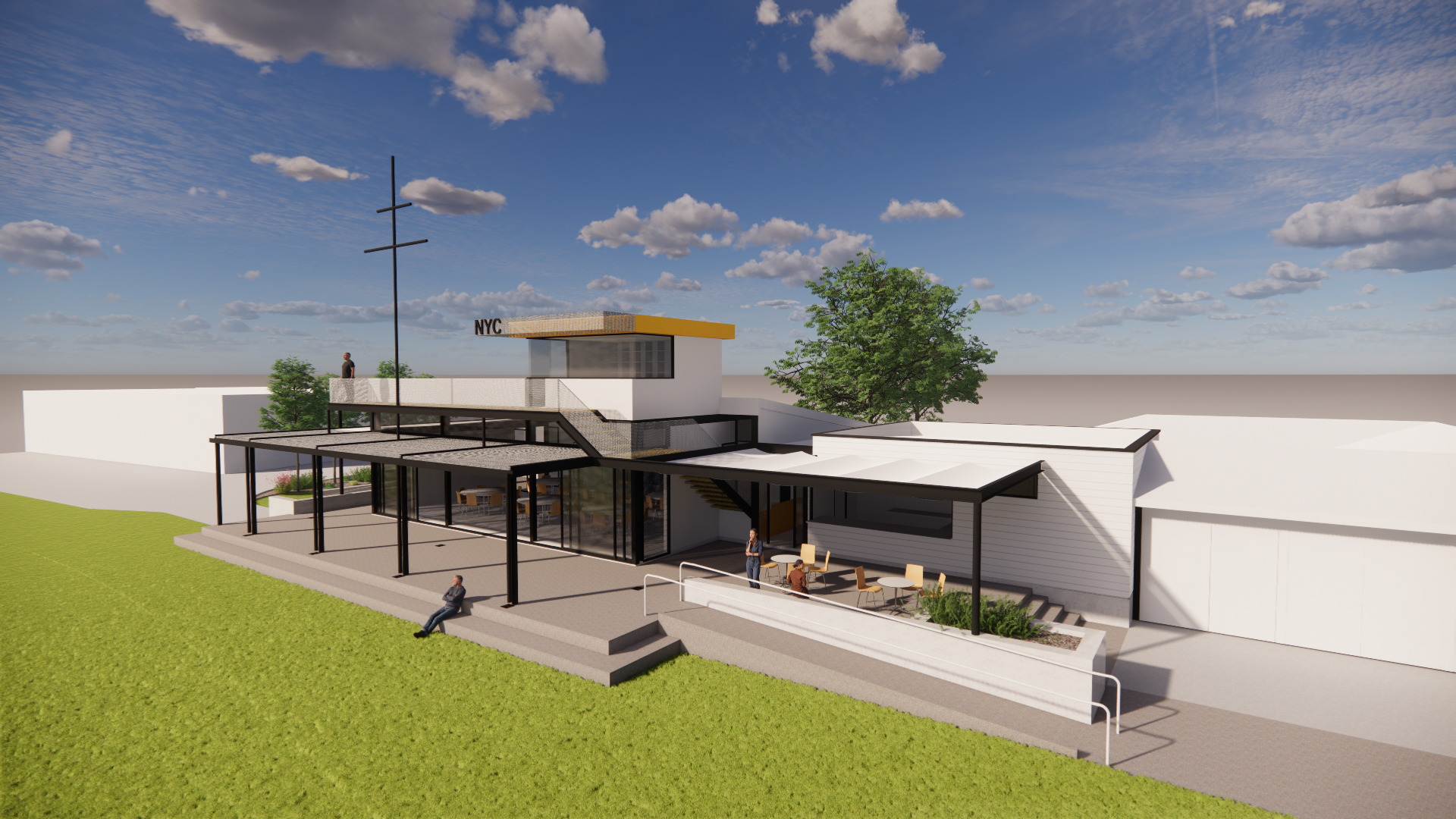
Designing a building for a coastal environment posed several challenges. The structure needed to accommodate
large, open spaces for training rooms, social areas, and a canteen. It also had to be resilient, to withstand the
strong winds common in coastal areas. With these factors in mind, we aimed to create a durable structure while
ensuring the design was cost-efficient.
The design also had to align with relevant Australian Standards, which provide guidelines for wind loading, steel
structures, and other critical elements. These included standards such as AS1170 (for wind loads) and AS4100
(for steel structures), which ensures the building will be safe, stable, and long-lasting.
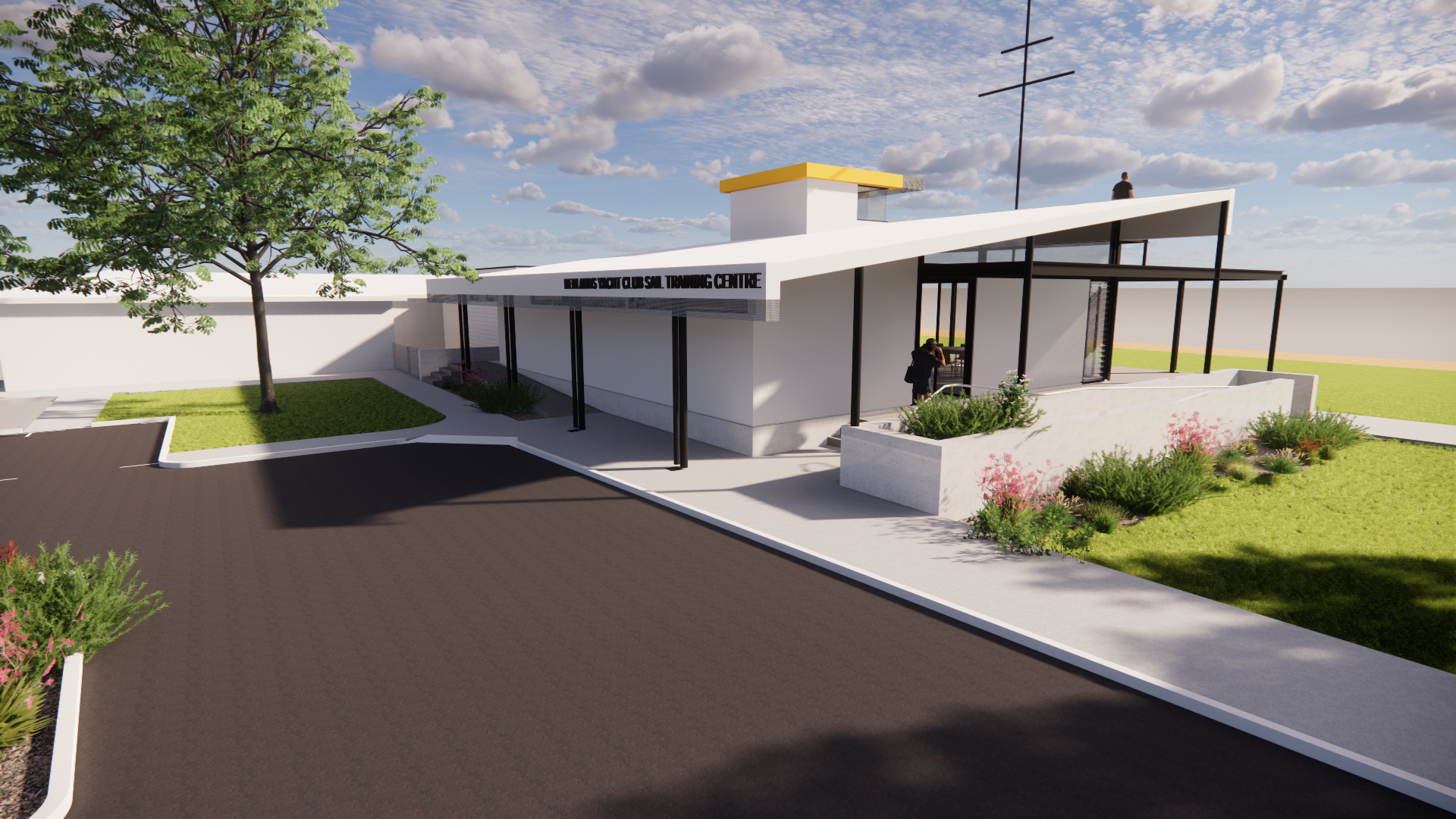
The building’s primary structural framework is a steel-framed design, chosen for its strength and versatility. Steel is ideal for open-space buildings due to its ease of construction and low maintenance requirements. The use of portal frames throughout the design allows for large open rooms without requiring excessive internal columns, which is particularly important for the training rooms, where unobstructed space is needed.
The Sail Training Centre will feature external terraces that offer scenic views of the river.
These spaces are designed to support social events and will be constructed with steel framing, ensuring stability
while blending with the natural surroundings.
The canteen roof is designed to be lightweight yet strong enough to handle environmental factors like wind and rain. Steel trusses provide the necessary support, ensuring durability and aesthetic appeal.
The training rooms, where sailing lessons and other activities will take place, will be supported by portal frames. These frames create open, flexible spaces without internal columns, providing maximum functionality.
To meet all performance standards and ensure structural integrity, we used advanced structural analysis
software. This allowed us to model the building’s response to various forces, including wind and other loads,
optimising the design for both safety and cost-efficiency.
Compliance with Australian Standards
The design adheres to several important Australian Standards, ensuring safety, stability, and environmental
sustainability. These include AS1170 for wind loading, AS4100 for steel structures, and AS4600 for
cold-formed steel.
Building Excellence with ARP
The Nedlands Yacht Club Sail Training Centre will be a modern, durable, and cost-effective facility designed to
meet the needs of future sailors. With careful attention to structural integrity and Australian Standards,
this project will provide a lasting resource for the local community and beyond.

Victoria
Western Australia
Queensland
New South Wales
Tasmania
Australian Capital Territory
Northern Territory
South Australia