
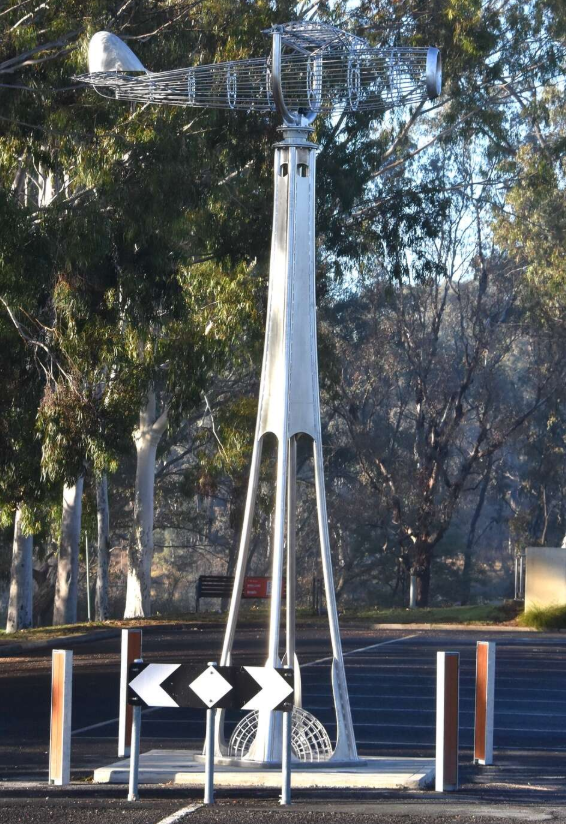
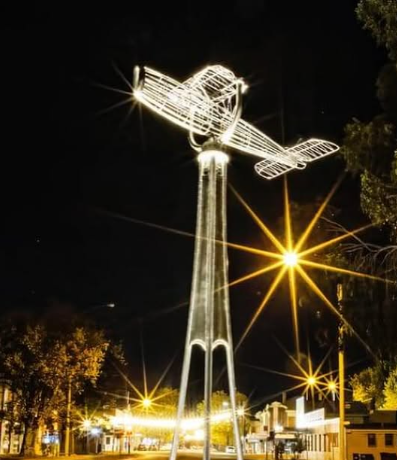
The Taking Flight sculpture is a dynamic structure designed with pivoting points which invoke the notion of flight. A yoke mechanism allows it to pivot along its nose-to-tail axis, while the hub assembly enables rotation around the column’s vertical axis. ARP’s role was to ensure the design met all engineering requirements, from structural integrity to mechanical functionality. This involved assessing the sculpture’s foundations, support system, and moving components using both finite element analysis (FEA) and hand calculations.
The first step in the process was to verify the stability of the sculpture’s foundations and pole assembly. Structural engineers assessed the base to ensure it could withstand forces from wind and the weight of the sculpture. A thorough analysis of region-specific wind data was conducted to ensure the sculpture could perform safely in the long term. The structural integrity of the sculpture is essential for a highly visible public location.
ARP employed FEA simulations to model the sculpture in motion, allowing us to assess how forces from movement would affect both the mechanical components and the structural base. Hand calculations were used to cross-check the FEA results, ensuring realistic and representative modelling results.
FEA simulations provided valuable insights into how the sculpture would behave under different loading conditions. These simulations allowed us to model the movement of the sculpture and predict how the forces generated during motion would interact with its components. This detailed analysis ensures that both the structural and mechanical elements perform without risk of failure or instability, in real-world conditions.
Placed at the entrance to the Sir Edward ‘Weary’ Dunlop Learning Centre, the sculpture is designed to appear ‘flying’ among the gum trees. Visible to traffic along Nunn Street, its dynamic presence enhances the surrounding landscape while paying tribute to aviation history.
ARP’s involvement in the Taking Flight sculpture project demonstrates our ability to enable artistic vision with engineering precision. Our integration of technical fundamentals, with artistic flare, ensures that this iconic piece is an inspiring tribute to aviation and engineering.
ARP conducted structural and mechanical assessments based on wind data and the sculpture’s geometry. These analyses were crucial for determining the applicable loads and forces, which were incorporated into the FEA. Design optimisations were made to select components that met load requirements while ensuring long-term durability and safety.
Victoria
Western Australia
Queensland
New South Wales
Tasmania
Australian Capital Territory
Northern Territory
South Australia